

Tree health · Planning guide
Do Root Barriers Harm Trees?
Tree impact depends on the root-zone plan, excavation, drainage, irrigation, and roots disturbed—not on the barrier material alone.
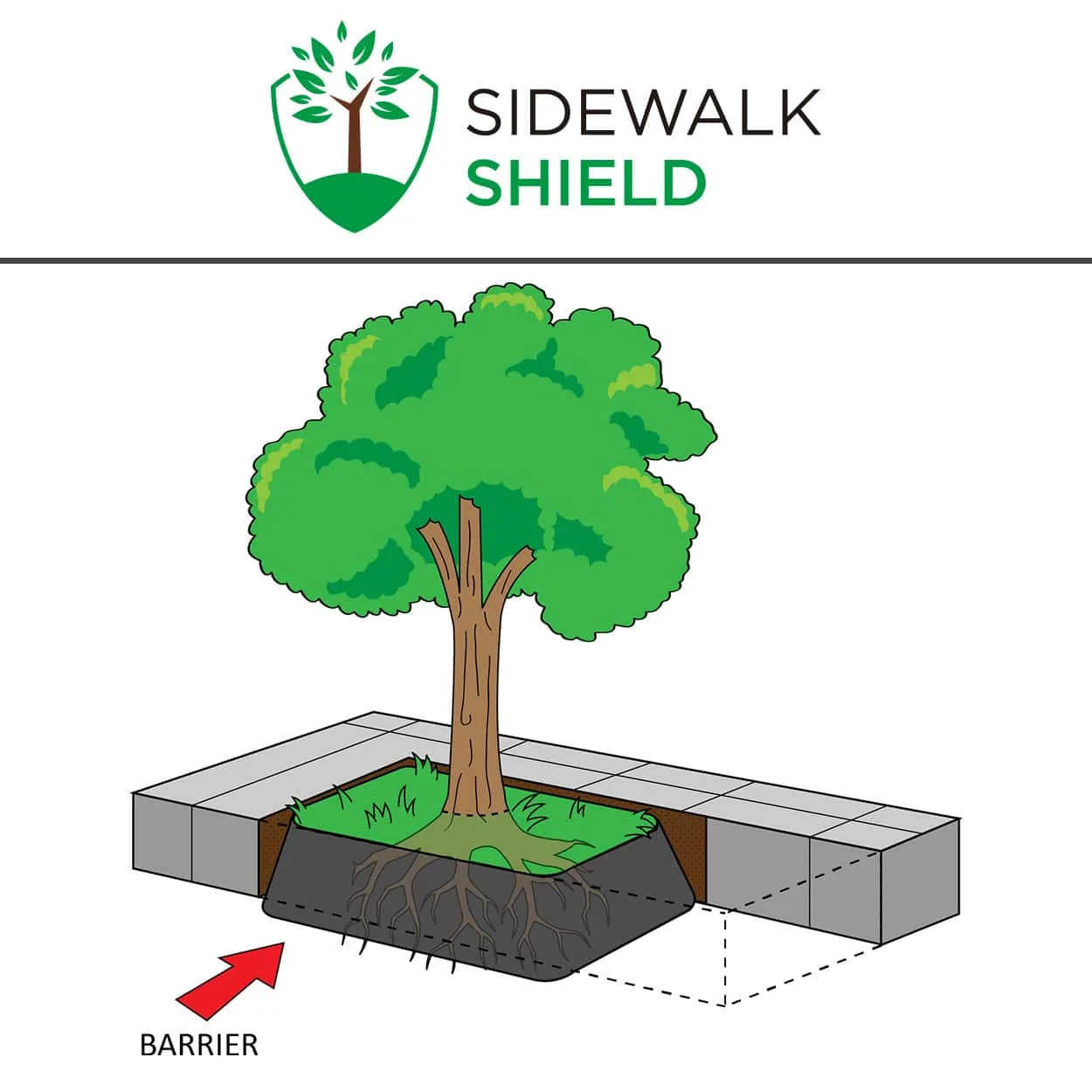
Use barrier as a planning tool, not a repair for existing damage.
Protect usable soil volume and review work around mature roots.
Bring in an arborist when excavation can affect tree health or stability.
A root barrier is not automatically harmless or harmful to a tree. The material is only one part of the project. The planting space preserved for the tree, the line and depth of the barrier, drainage and irrigation, nearby structures, and any roots disturbed during excavation all need to be considered.
If an installation may cut established roots or affect tree stability, the safe answer cannot come from a product page. Have a qualified arborist review the tree and the proposed excavation before work begins.
The trench may be a more important tree-health question than the sheet
Installing a below-grade barrier requires excavation. Around an established tree, that trench may encounter existing roots. Protech does not provide a universal safe distance, root-cutting allowance, or enclosure size because trees and sites are not interchangeable.
Mark the proposed line before digging. If roots may be cut, the tree’s condition is uncertain, or stability could be affected, pause for arborist review. Use the appropriate utility-locate service as well; tree work does not remove the need to identify buried utilities.
Preserve a purposeful planting area
A root-barrier plan should identify both the hardscape or infrastructure to protect and the usable planting area to preserve. A linear run can separate a tree from one protected edge. A surround layout can define a larger planned planting zone, but there is no universal enclosure size.
Consider usable soil volume, foundations, nearby structures, and future maintenance access before choosing either layout. A barrier should not be specified from the sidewalk alone while ignoring the space intended for the tree.
Do not overlook water movement
Review drainage and irrigation before excavation. The finished installation should not be assumed to preserve water movement automatically. After backfill, confirm that drainage and irrigation still work as intended and include the planting area in routine inspection.
If the site has uncertain drainage, constrained soil, or a complex relationship between roots and structures, seek qualified site guidance before finalizing the line.
Select material only after the site questions are answered
Protech offers 18-inch × 80-mil, 30-inch × 80-mil, and 36-inch × 100-mil HDPE profiles for tree-root projects. These are physical material options, not tree-health ratings. The deepest or thickest profile is not automatically the correct choice for every site.
Compare the three tree-root barrier profiles after the protected edge, root-zone plan, installed depth, and excavation conditions are understood.
Installation quality still matters
The installation method places the barrier at about a ten-degree angle, with the top closer to the tree and the bottom farther away. Keep the specified orientation along the run, plan the connection before trenching, and backfill in controlled layers.
Document the final barrier location for future work. Inspect the adjacent paving, planting area, drainage, and irrigation over time rather than treating the buried installation as invisible infrastructure.
Use professional review for established or uncertain sites
A product dimension cannot determine whether root cutting is acceptable or whether a tree has adequate space. Ask a qualified arborist to review projects involving established trees, significant roots in the proposed trench, uncertain tree condition, or possible stability concerns. A contractor or other site professional may also be needed for utilities, drainage, foundations, or difficult excavation.
Read How to Install a Tree-Root Barrier for the documented layout, orientation, connection, and backfill sequence. For material questions, send Protech the planned run, depth, and site notes; direct tree-health questions to a qualified arborist.
Questions before ordering
The practical details.
Use the application and installation pages for the complete material and field sequence.
Do root barriers harm trees?+
Not automatically, but no universal yes-or-no answer applies to every project. The available root zone, layout, excavation, root cutting, drainage, irrigation, and tree condition all matter. Have a qualified arborist review uncertain or established-tree work.
Is it safe to cut roots for the trench?+
Protech does not provide a universal root-cutting allowance. If excavation may encounter established roots or affect stability, stop and have a qualified arborist assess the tree and proposed line before cutting.
How close can a root barrier be to a tree?+
There is no universal distance in the Protech guidance. The plan must preserve an appropriate planting area while addressing the protected edge, roots, soil volume, drainage, irrigation, and surrounding structures.
Is a surround barrier safe for every tree?+
No universal enclosure size or layout is recommended. A surround layout can define a larger planned planting zone, but its size and suitability need to be evaluated for the tree and site.
Is installation different around an established tree?+
An established site may place existing roots in the proposed trench. That possibility calls for additional review before excavation; do not assume the same plan is appropriate for every new and established planting.
Can a barrier affect drainage or irrigation?+
Water conditions must be reviewed as part of the site plan. Confirm drainage and irrigation before excavation and check that they still work as intended after the barrier is backfilled.
Will installing a barrier reverse existing tree damage?+
No. A root barrier does not reverse existing tree damage. Tree condition, damaged paving, and the future root-management plan require their own appropriate evaluation.